
Every piece of content that earns organic traffic started with keyword research. Every article that sits on page three with no visitors was probably written without it.
Keyword research is the process of discovering what your audience types into search engines, understanding the intent behind those searches, evaluating which terms you can realistically rank for, and building a content strategy around that intelligence. Done well, it gives you a map of exactly what to create and in what order. Done poorly, it produces content that nobody searches for, or content targeting keywords so competitive it will never break the first page.
This guide covers the complete keyword research process for 2026: what keyword research actually is in the age of AI search, the metrics that matter, the tools available, a step-by-step workflow you can follow from scratch, and the mistakes that waste months of effort.
What is Keyword Research?
Keyword research — the systematic process of identifying and evaluating the search terms your target audience uses when looking for information, products, or services, then using that intelligence to plan content that earns organic visibility.
In 2015, keyword research largely meant finding high-volume terms and building pages around them. In 2026, it means something significantly more sophisticated.
Modern keyword research involves:
- Understanding the intent behind each query, not just its volume
- Evaluating whether the current results for a keyword can be improved on
- Identifying where your site has the authority to compete
- Mapping keywords to the right content types and page formats
- Planning content in a sequence that builds topical authority progressively
- Researching for both traditional organic rankings and AI citation potential
The shift from volume-first to intent-first keyword research is the most important change in the discipline over the past three years. Search engines in 2026 evaluate content based on how well it serves the searcher’s goal, not how frequently it repeats a keyword. Keyword research that begins with intent rather than volume produces content that ranks and converts.
Why Keyword Research Matters
Keyword research is not optional. It is the foundation of every other content and SEO decision.
Without keyword research, you are guessing at what your audience wants. Some guesses land. Most do not. The sites that grow most consistently through organic search are those that treat keyword research as a systematic, ongoing process rather than a one-time task.
The business case is straightforward: organic traffic from well-targeted keywords costs nothing per click, compounds over time, and attracts visitors with demonstrated interest in what you offer. But it requires knowing which keywords to target before you invest time in creating content.
In 2026, keyword research also informs your AI search strategy. AI Overviews and AI Mode do not just rank pages. They synthesise answers from pages that have built authority on specific topics. Identifying the topics your audience searches for and building comprehensive coverage of them is the fastest path to both traditional rankings and AI citations.
The Core Keyword Metrics
Before covering the process, understanding the metrics you will evaluate for each keyword is essential.
Search Volume
Search volume — the average number of times a keyword is searched per month, typically displayed as a monthly average over the past twelve months.
High search volume is appealing but not the primary selection criterion it once was. Several important caveats apply:
Search volume figures from tools are estimates, not exact counts. Different tools report different volumes for the same keyword. The figures represent averages and can mask significant seasonal variation.
High-volume keywords attract the most competition. A site with limited authority competing for a 100,000 monthly search volume keyword will not rank for it regardless of content quality.
Volume without intent context is meaningless. A keyword with 50,000 monthly searches but AI Overviews answering it directly may drive far less actual click traffic than a keyword with 2,000 searches but a clear click-through pattern.
Volume is best used as a rough size filter. Once a keyword passes your intent and authority thresholds, higher volume is better than lower volume, all else being equal.
Keyword Difficulty
Keyword difficulty (KD) — a score, typically from 0 to 100, that estimates how hard it would be to rank in the top ten results for a keyword, primarily based on the backlink profiles and authority of currently ranking pages.
As a rough guide: 0 to 20 is considered easy, 21 to 40 moderate, 41 to 60 hard, and 61 to 100 very hard. Different tools calculate KD differently, so treat the score as directional rather than precise.
Keyword difficulty is most useful as a filter for realistic targeting. A brand new site should generally target keywords with KD below 20. A site with moderate authority can target 20 to 40. A high-authority site can compete for 40 and above.
One important caveat for 2026: traditional KD scores measure link-based difficulty. They do not fully account for content quality gaps in current results. A keyword with a KD of 45 where the top-ranking pages are superficial and poorly structured may be more attainable than the score suggests, if you can publish significantly better content. SERP analysis supplements the KD score.
Cost Per Click (CPC)
CPC — the average amount advertisers pay per click for a keyword in Google Ads.
CPC is a commercial intent signal even for organic SEO. Advertisers only bid money on keywords that convert to revenue. A keyword with a high CPC (say, £30 to £100) signals that the audience searching it is close to a commercial decision, even if you never run paid ads.
In 2026, CPC should be used as a directional indicator of commercial value rather than a precision measure of traffic value. AI Overviews have fragmented click patterns on some high-CPC informational keywords, reducing actual traffic value below what CPC alone might suggest.
Search Intent
Covered in detail in T2-004 (What is Search Intent), intent is the most important filter in modern keyword research. Every keyword must be evaluated for its dominant intent before any content decision is made.
The four intent types are informational (learning), navigational (finding), commercial (comparing), and transactional (acting). The content type, format, and depth required differ completely by intent. Targeting a transactional keyword with a blog post or an informational keyword with a product page are both intent mismatches that no amount of optimisation can overcome.
Topical Authority Fit
A metric not tracked in keyword tools but critical in 2026: does this keyword fit within the topical territory your site is building authority in?
A keyword with good volume, low difficulty, and clear intent is still a poor choice if it is unrelated to the subject area your site covers. Publishing content on unrelated topics fragments your topical authority signal rather than strengthening it.
Keyword selection should be restricted to the topic clusters your site is deliberately building coverage of. Relevance to your core subject area is a prerequisite, not a bonus.
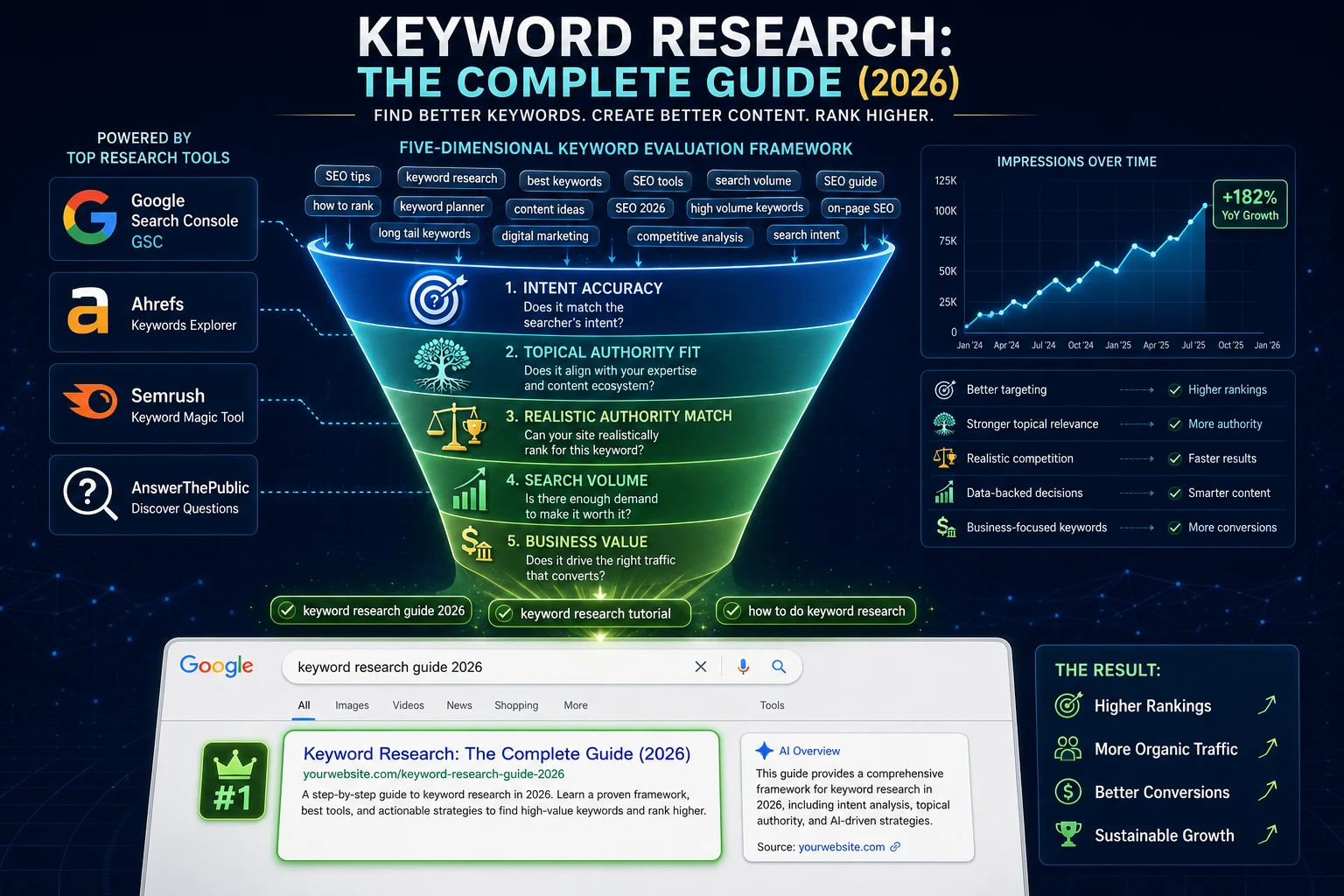
The Five-Dimensional Keyword Evaluation Framework
The traditional two-dimensional keyword evaluation model (high volume + low difficulty = good keyword) was functional in a simpler search environment. In 2026, with AI search, topical authority signals, and intent-first ranking, it produces consistently suboptimal keyword selections.
A more complete evaluation considers five dimensions before selecting a keyword:
1. Intent accuracy — Does targeting this keyword match the searcher’s goal with the content you can credibly create? This is the first filter. A keyword that fails the intent test is eliminated regardless of volume or difficulty.
2. Topical authority fit — Does this keyword fall within the subject area your site is building coverage of? Filtered second because out-of-scope keywords waste effort regardless of their other metrics.
3. Realistic authority match — Given your site’s current domain authority and backlink profile, can you realistically rank for this keyword in a reasonable timeframe? Low-authority sites should focus on low-difficulty keywords. High-authority sites can target competitive terms.
4. Search volume — Among keywords that have passed the first three filters, higher volume is better. But volume is evaluated last, not first.
5. Business value — Does ranking for this keyword serve a business objective? Traffic alone is not the goal. Does this keyword attract people who are potential customers, readers, or leads? High-volume keywords with no connection to your audience’s decision-making process produce traffic with no business return.
Applying these five filters in order produces a significantly better keyword list than volume-first selection.
Step-by-Step Keyword Research Process
Step 1: Define Your Topic Territory
Before researching any specific keywords, establish the topical boundaries your site will cover.
This is a strategic decision, not a research task. What subject area does your site focus on? What does your audience come to you to learn or find? What are the core topics and subtopics that define your space?
For a site like Visiblytics covering SEO and digital marketing tools, the topic territory might include: SEO fundamentals, keyword research, on-page SEO, technical SEO, link building, content marketing, local SEO, and SEO tools. Every keyword researched should fall within one of these categories.
Defining your topic territory prevents scope creep, focuses content investment, and ensures every keyword you target contributes to topical authority in your core areas.
Step 2: Generate Seed Keywords
Seed keywords — broad, one to three word terms that represent the core topics within your territory. They are not necessarily keywords you will target directly. They are the starting points from which you will discover the specific keywords worth targeting.
Sources for seed keywords:
Your own knowledge. Write down every broad term related to your topic area. For an SEO site: SEO, keyword research, backlinks, on-page SEO, technical SEO, link building, content marketing, search engines, Google rankings, organic traffic.
Competitor navigation. Visit the top three to five competitor sites in your niche. Their main navigation categories, blog category pages, and pillar content titles are all seed keyword signals.
Customer or audience language. What words do your customers use to describe their problems? Sales team FAQs, support ticket language, community forum questions, and social media discussions reveal the vocabulary of your actual audience. This is especially valuable because tools reflect search behaviour, which sometimes differs from how people describe problems in conversation.
Google autocomplete. Type each seed keyword into Google and note every suggestion that appears. These are real searches Google has detected at volume. Autocomplete suggestions are themselves valuable keyword leads.
People Also Ask boxes. Search any seed keyword and note every question that appears in the People Also Ask section. These are direct signals of what your audience is asking around the topic.
Step 3: Expand with Keyword Research Tools
With seed keywords established, use tools to systematically expand your keyword list and gather metrics for evaluation.
Free tools:
Google Keyword Planner requires a Google Ads account but provides search volume ranges and related keyword ideas directly from Google’s own data. Best for validating volume estimates.
Google Search Console shows keywords your site already appears for in search results, including impressions, clicks, and average position. Invaluable for finding existing opportunities to improve.
Google Trends shows search interest over time and by geography. Useful for identifying seasonal patterns and whether a keyword’s popularity is rising or falling.
AnswerThePublic generates keyword ideas formatted as questions, comparisons, and prepositions around a seed keyword. Strong for finding long-tail question keywords.
Paid tools:
Ahrefs Keyword Explorer offers billions of keyword ideas, search volume, keyword difficulty, click data, and SERP analysis. One of the most comprehensive keyword research platforms available.
Semrush Keyword Magic Tool provides extensive keyword ideas with volume, difficulty, intent classification, and competitor data. Strong for competitive research and keyword gap analysis.
Mangools KWFinder is widely regarded as providing the most accurate keyword difficulty scores on the market. Particularly strong for long-tail and local keyword research.
Ubersuggest provides keyword ideas, volume, difficulty, and CPC data. The most accessible paid tool for beginners.
The tool-agnostic workflow: Enter each seed keyword into your chosen tool, export all suggested keywords, and collect the following data for each: search volume, keyword difficulty, CPC, and search intent (where the tool provides this, or assess manually via SERP analysis).
Step 4: Analyse SERP for Intent and Opportunity
For every keyword you are considering targeting, search it in an incognito window and analyse the top five results.
This SERP analysis answers four critical questions:
What is the dominant content type? Is Google ranking blog posts, product pages, category pages, tools, or videos? The dominant type is the format you need to match.
What is the content format? Step-by-step guide, listicle, comparison table, definition, review? Match the dominant format.
What is the angle? Beginner or expert? Budget or premium? Broad overview or specific deep dive? Match the dominant angle.
Is there a quality gap? Are the current top results genuinely comprehensive and well-executed, or are they thin, outdated, or poorly structured? A quality gap represents a ranking opportunity even at higher difficulty scores.
SERP analysis is not optional. Tool-based keyword difficulty scores tell you how hard it is to match the current results on authority signals. They do not tell you whether the current results are actually good. A keyword with a KD of 50 where current results are poor-quality 2019 articles is considerably more attainable than a keyword with a KD of 30 where current results are comprehensive, recently updated, and well-structured.
Step 5: Apply the Five-Dimensional Filter
With your expanded keyword list and SERP data in hand, apply the five-dimensional evaluation framework:
Eliminate keywords that fail the intent filter. Your content cannot satisfy that intent. Remove them.
Eliminate keywords outside your topical territory. They do not contribute to your site’s authority focus. Remove them.
Eliminate keywords where competing page authority is realistically out of reach given your current domain authority. Move these to a “target later” list for when authority grows.
From the remaining list, rank by search volume and then prioritise the highest-value opportunities based on business relevance.
What remains is your targeted keyword list.
Step 6: Cluster Keywords by Topic
Individual keyword targeting is less effective than topic-level targeting. Keywords with similar intent and topic area should be grouped into clusters and addressed by single, comprehensive pages rather than separate thin articles.
Keyword clustering — the process of grouping related keywords that should be targeted by the same page, because they share the same search intent and topic, rather than requiring separate content pieces.
For example: “keyword research guide,” “how to do keyword research,” “keyword research process,” and “keyword research step by step” all share the same informational intent and topic. They should be targeted by one comprehensive guide, not four separate articles. A well-written guide will rank for all four variants naturally.
Tools like Ahrefs and Semrush offer clustering features. Manual clustering involves grouping keywords where the SERP results are substantially overlapping (the same pages ranking for multiple variants indicates Google treats them as the same topic).
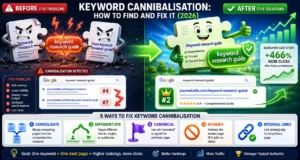
Clustering reduces content duplication risk, prevents keyword cannibalistion, and ensures each piece of content you publish captures a broader range of related searches.
Step 7: Map Keywords to Content Types
Once clustered, each keyword group needs to be matched to the appropriate content type based on the dominant intent.
Informational clusters map to blog posts, guides, tutorials, and how-to articles.
Commercial clusters map to comparison articles, best-of lists, review posts, and buying guides.
Transactional clusters map to product pages, service pages, and landing pages.
Navigational clusters map to your own brand pages, which you should ensure rank prominently for your own brand terms.
This mapping is the bridge between keyword research and content planning. Every cluster on your list should have a designated content type, a planned title, and a target publication date.
Step 8: Prioritise Your Keyword Sequence
With your keyword list clustered and mapped, the final step is sequencing: determining which keywords to target first and in what order.
The sequencing principle for most sites, particularly newer ones, is to start with the lowest-competition, most-specific keywords and build toward the higher-volume, more competitive terms over time.
There are several reasons for this:
Early rankings on low-competition keywords build topical authority and domain authority, which improve your ability to rank for harder keywords later.
Low-competition keywords often have clearer intent and more specific audiences, leading to better conversion rates than broad head terms.
Ranking for anything produces momentum, backlinks, and engagement data that helps the broader site.
A practical sequencing framework:
Start with long-tail, low-difficulty keywords (KD under 20) in your core topic areas. Build comprehensive cluster coverage across your topic territory at this difficulty level. Then move to mid-tail, moderate-difficulty keywords (KD 20 to 40) once your site has established some authority. Target high-difficulty head terms (KD 40+) once topical authority is well-established.
This sequence produces faster early results while building the foundations required for long-term competitive ranking.
Keyword Research for AI Search
In 2026, keyword research must account for how AI search systems discover and cite content alongside traditional ranking targets.
AI Overviews and AI Mode do not rank keywords in the traditional sense. They synthesise answers from pages they identify as authoritative and relevant. But the queries that drive AI answers are the same queries that drive traditional search. Researching them is the same process.
What changes is the content strategy around certain keyword types:
Simple informational keywords (those whose answers fit in a few sentences) are increasingly answered directly by AI Overviews with low click-through. If your keyword research identifies large volumes of these single-answer queries, prioritise them for AI citation optimisation (clear structure, direct definitions, factual accuracy) rather than expecting significant click traffic.
Complex informational and commercial keywords (those requiring comparison, evaluation, or multi-step guidance) still drive strong click-through because AI summaries cannot fully replace a comprehensive guide or a detailed comparison. These remain the highest-value keyword targets for content creators.
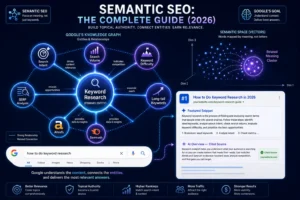
Topical depth across a subject area determines AI citation eligibility. A site that comprehensively covers keyword research across dozens of interlinked posts is more likely to be cited in AI answers about keyword research than a site with one strong post on the topic. This makes the content cluster approach essential for AI visibility, not just traditional SEO.
Keyword Research for New Websites
A new website with no existing domain authority faces a specific challenge: the keywords worth targeting at scale are too competitive to rank for initially.
The keyword research strategy for a new site must account for this:
Phase 1 (Months 1 to 6): Target exclusively long-tail, very low-competition keywords (KD 0 to 20). These may have lower volume, but they are realistic targets that produce early rankings and begin building topical authority. Focus on very specific questions and subtopics within your territory.
Phase 2 (Months 6 to 12): As early content earns backlinks and rankings, extend to moderate-competition keywords (KD 20 to 35). The authority built in Phase 1 makes these attainable.
Phase 3 (Year 2 and beyond): With established topical authority and a growing domain authority, target the competitive head terms (KD 35+) that drive the highest volume.
This phased approach is not optional for new sites. Targeting competitive keywords before authority is established wastes content investment and demoralises teams when rankings do not materialise.
Common Keyword Research Mistakes
Targeting keywords based on volume alone
Volume is the last filter, not the first. High-volume keywords are also the highest-competition keywords. Starting a keyword strategy by chasing the biggest numbers is the fastest way to produce content that never ranks.
Ignoring search intent
Publishing an informational article for a transactional keyword or a product page for an informational keyword is an intent mismatch. The content may be excellent but it will not rank for the intended term. SERP analysis before content planning prevents this.
Targeting one keyword per page in isolation
Each page should target a cluster of related keywords sharing the same intent and topic, not a single keyword in isolation. Targeting one keyword per page ignores the natural semantic breadth that comprehensive content achieves, and creates unnecessary page proliferation.
Skipping SERP analysis
Keyword tool metrics tell you about volume and difficulty. They do not tell you whether the current results are actually good or whether a quality gap exists. SERP analysis is not optional. It is where the most important insights about ranking opportunity come from.
Neglecting existing keyword opportunities
Google Search Console shows keywords your site already ranks for (especially in positions 5 to 20). These are existing opportunities to improve rankings with content updates or optimisation, rather than starting from zero. Many sites ignore this data entirely and miss some of the fastest SEO wins available.
Keyword cannibalistion through poor planning
Publishing multiple pages targeting the same or overlapping keywords causes them to compete against each other, splitting ranking signals and weakening both pages. Keyword clustering and a properly maintained keyword map prevent this. Establishing which page owns each keyword cluster before publishing is essential.
Not refreshing keyword research periodically
Keyword research is not a one-time task. Search behaviour evolves. New opportunities emerge. Competitors publish content for previously uncontested terms. A minimum quarterly review of keyword performance and new opportunities keeps a keyword strategy current.
Keyword Research Tools: A Comparison
| Tool | Best For | Free Option | Paid Starting Price |
|---|---|---|---|
| Google Keyword Planner | Volume validation, PPC keyword data | Yes (requires Ads account) | Free |
| Google Search Console | Existing ranking opportunities | Yes | Free |
| Google Trends | Seasonal trends, rising topics | Yes | Free |
| AnswerThePublic | Question keyword generation | Limited | Paid plans available |
| Ahrefs | Comprehensive research, competitive analysis | Limited | ~£99/month |
| Semrush | All-round research, competitor gap analysis | Limited | ~£99/month |
| Mangools KWFinder | Accurate KD scores, long-tail research | Limited trial | ~£29/month |
| Ubersuggest | Beginner-friendly paid research | Limited | ~£29/month |
For beginners: Google Keyword Planner combined with Google Search Console and Google Trends covers the essentials at no cost. For serious content strategies: Ahrefs or Semrush provide the data depth required for competitive research, SERP analysis, and keyword gap identification.
❓ Frequently Asked Questions
How many keywords should I research before starting to publish content?
Enough to plan your first three to six months of content, which typically means 50 to 200 prioritised, clustered keyword targets depending on your publication rate. Research in batches and refresh the list quarterly rather than trying to research your entire topic territory at once.
Should I target keywords my competitors rank for?
Yes, selectively. Competitor keyword research reveals terms that are already proven to drive traffic in your niche. A keyword gap analysis (comparing which keywords competitors rank for that your site does not) surfaces the highest-opportunity targets. However, if your competitors rank for a keyword because they have built significantly more authority, targeting the same term too early wastes effort.
What is a good search volume to target?
It depends entirely on your site’s authority and the competition level. For a new site, a keyword with 100 to 500 monthly searches and a KD under 15 may be an excellent target. For an established site with strong authority, a keyword needs volume in the thousands to justify the investment. There is no universal “good” volume. The right volume is the highest volume you can realistically rank for given your current authority.
How long until a targeted keyword produces traffic?
Between three and twelve months for most sites, depending on authority, competition level, and content quality. Low-competition keywords on established sites can produce traffic within weeks. Competitive keywords on new sites may take eighteen months or more to show meaningful rankings.
Can I do keyword research without paid tools?
Yes. Google Keyword Planner, Google Search Console, Google Trends, and Google Autocomplete provide enough data to build a functional keyword strategy at no cost. Paid tools add depth, speed, and competitive intelligence, but they are not prerequisites for effective keyword research.
What is keyword cannibalistion and how do I avoid it?
Keyword cannibalistion occurs when multiple pages on your site target the same keyword, causing them to compete against each other and weaken each other’s rankings. Avoid it by maintaining a keyword map that assigns each keyword cluster to a single page before publishing, and by clustering related keywords together rather than creating separate pages for similar variations.
Summary
Keyword research in 2026 is an intent-first discipline, not a volume-first one. The process begins with defining your topical territory, generating seed keywords, expanding with tools, analysing SERPs for intent and opportunity, applying the five-dimensional evaluation framework, clustering related keywords, mapping them to content types, and sequencing publication by difficulty level.
The key principles to carry forward:
- Intent is the first filter. No keyword passes evaluation without a clear, satisfiable intent that your content can address.
- Topical authority fit is the second filter. Only target keywords within your core subject territory.
- Volume and difficulty are evaluated after intent and authority fit, not before.
- SERP analysis is non-negotiable. Tool metrics do not reveal quality gaps. Only looking at current results does.
- Cluster keywords by topic. One comprehensive page targeting a cluster of related keywords outperforms multiple thin pages targeting individual variations.
- Sequence publication from low to high difficulty. Build authority on attainable keywords before targeting competitive head terms.
- Keyword research is ongoing. Review and refresh quarterly.
Done consistently, keyword research transforms content planning from guesswork into a system that compounds over time.
Advanced Keyword Research Techniques
Once you have mastered the core process, several advanced techniques deliver additional competitive advantage.
Keyword Gap Analysis
Keyword gap analysis — the process of identifying keywords that your competitors rank for but your site does not, revealing content opportunities you have not yet addressed.
The process: identify your three to five main competitors. Enter their domains into Ahrefs or Semrush and run a keyword gap or content gap report. The tool will surface keywords where they rank in the top ten and your site does not appear at all.
Filter the results by relevance to your topic territory, then apply the five-dimensional framework to prioritise which gaps to fill first. Competitor gap analysis is one of the most efficient ways to find proven keyword opportunities because you are targeting terms that already drive traffic to similar sites.
Mining Google Search Console for Quick Wins
Your Google Search Console Performance report contains some of the most valuable keyword data available, and it is often ignored.
Filter the report to show pages ranked in positions 4 to 20. These are pages that are appearing in search results but not yet earning significant click traffic. A page ranked at position 8 for a keyword with 3,000 monthly searches is earning a fraction of what it would earn at position 3.
For each of these pages, identify the keywords driving impressions and diagnose why the page is not ranking higher. Common causes include thin content, poor title tag alignment, intent mismatch, or lack of backlinks. Improving these pages to earn top-five positions produces faster traffic gains than publishing new content targeting entirely new keywords, because the foundational ranking signal is already established.
Question Keyword Research
Questions are among the most valuable keyword types in 2026 for two reasons: they directly reflect search intent, and they are highly eligible for People Also Ask features and AI Overview citations.
Sources for question keywords: AnswerThePublic, People Also Ask boxes in SERPs, Reddit and Quora discussions in your niche, AlsoAsked.com, and the “Questions” filter in Ahrefs and Semrush keyword tools.
For every core topic in your territory, build a list of every question your audience asks. Many of these will be long-tail with modest volume, but collectively they represent the full informational needs of your audience and produce strong AI citation signals.
Seasonal and Trending Keyword Research
Google Trends is the essential tool for two keyword types that standard volume data handles poorly.
Seasonal keywords spike predictably at certain times of year. A keyword with an average monthly volume of 1,000 may actually drive 8,000 searches in December and almost none in July. Publishing seasonal content four to six weeks before the peak allows time for indexing and ranking before traffic peaks.
Trending keywords are terms that are rising in search volume. Getting into emerging keyword spaces early, before competition intensifies, can produce rankings that are much easier to establish and maintain than trying to break into a mature, competitive space.
Google Trends comparison view is particularly useful for evaluating whether a keyword’s popularity is growing, stable, or declining before investing content resources in it.
Negative Space Analysis
Negative space analysis — identifying topics adjacent to your competitors’ keyword territories that they have not covered, representing uncontested opportunities within your niche.
This requires manually reviewing competitor content libraries rather than using a tool. Visit their blog, look for topic areas they have addressed only superficially, or topic adjacencies they have missed entirely. Publishing comprehensive coverage of these gaps positions you as the authoritative source in spaces where competition is low and establishing a ranking foothold is faster.
Using Reddit and Quora for Keyword Discovery
Search forums and community platforms for your topic reveal how your audience naturally talks about their problems, questions, and needs. This language often differs from how formal keyword tools present terms, but it reflects real user vocabulary.
On Reddit, search your core topics and note the most upvoted posts and the questions that repeatedly appear. On Quora, search your topic area and note which questions have the highest view counts and engagement.
The keywords you discover in these sources may not always show up with significant volume in keyword tools, but they represent real audience language that, when incorporated naturally into content, improves the semantic completeness of your pages and increases their relevance across a broader range of related searches.
Building and Maintaining a Keyword Map
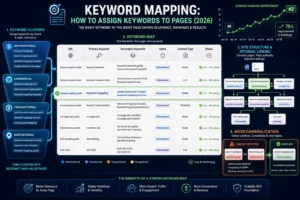
A keyword map — a structured document that records which keyword cluster each page on your site targets, ensuring no two pages compete for the same keyword and that coverage across your topic territory is systematic.
At minimum, a keyword map should record:
- URL of the page
- Primary keyword cluster targeted
- Secondary keywords included
- Search intent
- Content type (guide, list, product page, etc.)
- Publication date
- Current ranking position (updated regularly)
The keyword map serves several functions. It prevents keyword cannibalistion by making it immediately obvious when a new piece of content would overlap with existing content. It reveals coverage gaps, showing which parts of your topic territory are unaddressed. It provides the data for quarterly keyword research reviews.
For a site with a large content plan like Visiblytics, the keyword map is not a nice-to-have. It is an operational necessity. Without it, cannibalistion and coverage gaps are inevitable at scale.
Keyword Research for Different Business Types
The keyword research process is the same regardless of business type, but the emphasis and prioritisation differ by context.
Blog or Content Site
The entire business model depends on organic traffic, making keyword research the most foundational activity. Priority is heavily weighted toward informational keywords with clear audience relevance. Commercial and transactional keywords are secondary unless the site monetises through affiliate marketing or product sales.
Topical authority is the primary competitive advantage, so keyword selection should systematically build comprehensive coverage across defined topic clusters before expanding scope.
E-commerce
Product and category page keywords carry the most direct commercial value. Research focuses on commercial and transactional intent keywords for specific product types, categories, and brands. Informational keywords support the blog and buying guide content that attracts shoppers earlier in the purchase journey.
Local modifiers matter for e-commerce businesses with physical locations or regional shipping priorities.
Local Service Business
Geographic modifiers transform standard keyword research into local keyword research. “Plumber” becomes “plumber in Sheffield.” “Dentist” becomes “dentist near me” or “dentist Manchester city centre.”
Search volume for local keywords is always lower than national equivalents, but ranking difficulty is also lower and conversion rates are significantly higher because the searcher has demonstrated local commercial intent. Local keyword research focuses on service-plus-location combinations and “near me” variants.
SaaS and Software
A mix of informational keywords (for blog and educational content that attracts users researching the problem your tool solves) and commercial keywords (for comparison and review content targeting users evaluating solutions). Branded competitor keywords are particularly valuable as paid search targets.
Feature-specific long-tail keywords often represent the highest-converting organic targets, because a user searching for a very specific feature is already aware of the product category and close to a purchase decision.
Professional Services (Legal, Finance, Medical)
YMYL (Your Money or Your Life) keyword categories where E-E-A-T requirements are most stringent. Keyword research must account for the extremely high competition in many professional service keyword spaces and the need for demonstrably credentialed content.
Long-tail and local keyword strategies are particularly important in these sectors, as competing for broad national head terms requires extraordinary authority that most individual practices cannot achieve.
How to Evaluate Keyword Research Quality
Not all keyword research produces equally useful results. Here is how to evaluate whether your keyword research is serving your strategy effectively.
Content is earning impressions for intended keywords. Google Search Console should show rising impressions for the keywords each piece of content targets within the first few months of publication. No impressions after ninety days suggests indexing issues or severe difficulty mismatch.
Content is ranking for multiple keyword variations within each cluster. A comprehensive piece targeting a keyword cluster well should naturally rank for dozens of related variations, not just the exact primary keyword. If content only ever ranks for the exact keyword and nothing related, it suggests the content is too narrow and not achieving the semantic depth expected.
Traffic quality metrics are positive. Organic visitors landing from well-targeted keywords should exhibit positive engagement signals: meaningful dwell time, low bounce rates, and (where measurable) conversion to desired actions. Poor engagement metrics from organic traffic often signal intent mismatch even when rankings are achieved.
Cannibalistion is not occurring. If two pages are competing for the same keyword in Search Console data (both showing impressions for the same query), a cannibalistion issue exists that the keyword map should have prevented.
Summary: The Keyword Research Checklist
Before publishing any new piece of content, verify:
- The primary keyword cluster has been researched and the volume, difficulty, and CPC are recorded
- SERP analysis has confirmed the dominant content type, format, and angle
- Intent has been confirmed and the planned content matches it
- The keyword does not already have a page assigned to it in the keyword map
- Related secondary keywords have been identified and will be naturally incorporated
- The keyword cluster fits within the site’s topical territory
- The difficulty level is appropriate for the site’s current authority
- The content has been assigned a publication priority based on the sequencing framework
Keyword research is the foundation that every other content and SEO investment builds on. The time invested in doing it rigorously at the start of every content project pays compounding returns throughout the life of every page published.