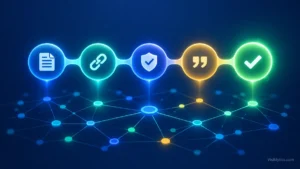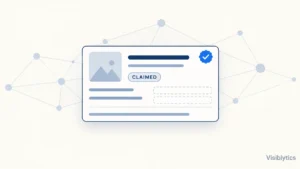
A knowledge panel for Suraj Saini and a knowledge panel for Visiblytics are built from different signals, display different information, and require different programs to develop. The underlying eligibility framework is the same for both, but what “clear entity identity” means for a person is different from what it means for a brand, and the external corroboration that moves a person entity toward panel confidence looks nothing like the corroboration that works for an organization entity.
This guide covers both tracks: what each type of panel contains, what builds confidence for each, and where the paths diverge in practical terms.
What a Personal Knowledge Panel Contains
A personal knowledge panel appears for a recognized individual: an author, executive, researcher, public figure, or professional with a verifiable and sufficiently recognized public presence. It is built from person entity signals.
The information typically displayed:
Name and description. The person’s full name as the primary identifier, followed by a brief description of their professional role and primary area of recognition. “SEO specialist and founder of Visiblytics” is a description. “Expert and thought leader” is not, because it is too generic to be useful for entity identification.
Occupation and affiliation. The person’s current professional role and the organization they are affiliated with. These are drawn from Person schema (jobTitle, worksFor), LinkedIn profile, Wikidata, and consistent external mentions. Inconsistency between these sources produces either missing information or incorrect information in the panel.
Associated entities. Related organizations, publications the person has contributed to, or other recognized entities the person is connected to. Each associated entity link in the panel is a relationship that has been corroborated across multiple sources.
Social and professional profiles. Links to LinkedIn, Twitter/X, personal website, and other verified profiles. These come from sameAs references in Person schema and from the profiles themselves linking back to the person’s primary web presence.
Notable works. Books, research papers, notable articles, or other works attributed to the person entity. These require Article or Book schema, consistent authorship attribution, and corroboration from external sources that cite or reference the work.
Related people. Other recognized individuals connected to the person through professional relationships, co-authorships, or organizational affiliations.
What a Brand Knowledge Panel Contains
A brand knowledge panel appears for an organization: a company, nonprofit, institution, product brand, or other organizational entity with a verifiable and sufficiently recognized presence. It is built from Organization entity signals.
The information typically displayed:
Organization name and description. The exact trading name and a factual description of what the organization does and what category it belongs to. Drawn from Organization schema (name, description), Wikidata, and credible external sources.
Founding information. Founding date and often founding location. Drawn from foundingDate in schema, Wikidata, and corroborating external mentions. A founding date that is missing from schema and Wikidata but mentioned in one press article will either not appear or appear with low confidence.
Founders and key people. Named individuals associated with the organization, each linked to their own entity (person entity panel, LinkedIn, or Wikidata entry). The quality of this section depends on how well the person-to-organization relationships are built in both directions.
Headquarters and location. Where the organization is based. Drawn from schema, Wikidata, Google Business Profile (where applicable), and consistent directory presences.
Products and services. What the organization offers. Drawn from schema properties and external categorization in directories and press coverage.
Social profiles and website. Official web presence and social profiles, drawn from sameAs references in Organization schema.
Subsidiaries and parent organizations. Where applicable, organizational hierarchy connections drawn from structured relationship data.
Where the Paths Diverge: Signal Comparison
The Knowledge Panel Eligibility Signals guide covers the five eligibility signals in depth. Here is how each signal looks different for personal panels versus brand panels.
Entity Identity
For a person: The primary challenge is disambiguation. Common names are shared by many people. A person entity needs distinguishing signals: specific professional role, organizational affiliation, geographic location, and credentials that separate this Suraj Saini from every other Suraj Saini. The more common the name, the more specific the disambiguation signals need to be.
For a brand: The primary challenge is category clarity. What type of entity is this? The schema @type value, the description language, and the industry category all need to be specific and consistent. “Visiblytics” used consistently everywhere is simpler than a common surname, but the category description needs to clearly distinguish an “SEO and AI Visibility platform” from a generic “technology company.”
Consistent Information
For a person: Consistency means the same name, title, employer, and credentials appearing identically across the author page, Person schema, LinkedIn, Wikidata, Twitter/X, and any external bylines. The challenge is that professional information changes more frequently for individuals: job titles change, organizational affiliations change, credentials are added. Each change requires updating all surfaces simultaneously.
For a brand: Consistency means the same organization name, founding date, description, and founder attribution across the entity homepage, Organization schema, Wikidata, and all external profiles. Brands tend to change less frequently than individuals, but rebrands and pivots create the highest-stakes consistency challenges. A partial rebrand, where some surfaces reflect the new name and others retain the old name, produces a signal split that knowledge graph systems have difficulty resolving.
Structured Data
For a person: Person schema is the primary vehicle. The properties that matter most for panel eligibility: name, jobTitle, worksFor, knowsAbout, hasCredential, sameAs. The worksFor property creates the machine-readable connection from the person to their organization, which is one of the most-traversed relationships in a panel context. Author pages need to be properly built, not just bio boxes in a CMS.
For a brand: Organization schema (or a more specific subtype) is the primary vehicle. The properties that matter most: name, @type, description, foundingDate, founder, knowsAbout, sameAs. The founder property creates the machine-readable connection from the organization to its key people. The @type subtype (ProfessionalService, SoftwareApplication, LocalBusiness) produces more specific entity classification than the generic Organization type.
Authoritative Mentions
For a person: The highest-value mentions are editorial attributions in credible publications: “Suraj Saini, founder of Visiblytics and specialist in AI Visibility, explains…” Each attribution names both the person entity and the organizational entity, states a professional role, and appears in a credible source. Podcast appearances, speaking credits, and expert quote features all produce similar signals. Academic citations, where applicable, carry particularly high weight.
For a brand: The highest-value mentions are editorial coverage in credible publications that names the organization, describes what it does, and places it in its professional category. Industry awards with recognized selecting bodies, inclusion in credible analyst reports, and coverage from established trade publications all contribute. Unlike person entities, brands can also benefit from structured business registries and chamber of commerce presences as corroborating sources.
Entity Relationships
For a person: The foundational relationship is person-to-organization: the connection to the employer or founded entity. Beyond that, professional network relationships (co-authors, collaborators, institutional affiliations) and topical relationships (consistent association with specific subject areas through content and external mentions) contribute to panel richness. A person entity with strong relationships to recognized organizations and topic areas has a denser knowledge graph network position than one with no professional connections.
For a brand: The foundational relationships are organization-to-people (founders, leadership) and organization-to-topic (what subject areas the organization is associated with). A brand whose founders have their own person entity panels and whose topical coverage is consistent and well-corroborated has significantly stronger relationship signals than one with anonymous authorship and scattered topical coverage.
The Practical Timeline Difference
Neither personal panels nor brand panels have a verified timeline. That said, based on how each type of entity builds the necessary signals, there are practical patterns worth knowing.
Personal panels often develop more quickly for individuals who have an existing body of published work under a consistent name, an established organizational affiliation with its own entity presence, and a history of being quoted or featured in credible sources. The signals can accumulate faster because each piece of content, each press mention, and each external profile contributes to a person entity that is already partially defined. The risk is higher too: person entities are more susceptible to disambiguation problems and to signal fragmentation if the person publishes under different name variants across different contexts.
Brand panels often develop more slowly for new organizations because the external corroboration layer is harder to build from scratch. A new brand has no history of press coverage, no established directory presence, and no accumulated external mentions. The technical foundation (schema, Wikidata, consistent profiles) can be built quickly, but the confidence threshold for a brand panel often requires more external corroboration than the same threshold for a person with an existing professional track record.
When You Need Both
For founder-led businesses like Visiblytics, the most effective strategy is building both entity types simultaneously, with the relationship between them explicitly stated in both directions.
The founder’s person entity panel and the organization’s brand panel reinforce each other when:
- The organization schema names the founder with a URL to the founder’s author page
- The founder’s Person schema includes worksFor pointing back to the organization URL
- External mentions consistently name both the person and the organization in the same professional context
- The Wikidata entry for the organization lists the founder, and the founder’s Wikidata entry lists the organization as employer
This bidirectional corroboration creates a tightly connected entity pair in the knowledge graph. When Google encounters information about Suraj Saini, it finds a connection to Visiblytics. When it encounters information about Visiblytics, it finds a connection to Suraj Saini. Each entity’s panel benefits from the other’s recognition signals.
The risk of this strategy is that inconsistency in one entity weakens both. If the founder’s author page uses a slightly different organizational name than the organization’s entity homepage schema, the relationship signal is weakened for both entities simultaneously.
The Entity Relationships guide covers how to build and maintain these bidirectional connections correctly.
❓ Frequently Asked Questions
Can a person have both a personal panel and be listed in their brand’s panel?
Yes, and this is the normal outcome for founders and executives of organizations that have knowledge panels. The person entity panel covers the individual. The organization entity panel lists the founder or leadership as associated people. Both panels coexist and reference each other through the entity relationship network.
Which comes first, personal or brand panel?
There is no rule. Whichever entity accumulates sufficient knowledge graph confidence first will develop a panel first. For founder-led businesses, the founder’s personal panel sometimes develops before the organization panel if the founder has an existing professional track record with accumulated external signals. For organizations with anonymous leadership, the brand panel may develop without any personal panel for the people behind it.
Does having a personal panel help the brand get a panel?
Indirectly, yes. A founder with a knowledge panel has an entity that is recognized by Google with sufficient confidence for public display. When that entity is explicitly connected to the organization through bidirectional schema and consistent external mentions, the organization benefits from the trust network proximity of the connected person entity. The relationship does not transfer the panel directly, but it strengthens the organizational entity’s knowledge graph position.
What if my personal name is very common?
Common names require stronger disambiguation signals. Your entity definition needs to be more specific: include your organizational affiliation in every professional context, use consistent credentials alongside your name, add geographic information where relevant, and pursue co-citations with recognized entities in your specific professional niche. The Entity Disambiguation guide covers the specific signals that help distinguish entities with common names.
Can a small brand get a knowledge panel before its founder has one?
Yes. The two entities operate independently in the knowledge graph. If the organization accumulates sufficient external corroboration (Wikidata entry, press coverage, consistent directory presence) while the founder’s person entity is still developing, the organization panel can appear first. The Small Business Knowledge Panel guide covers the realistic path to panel eligibility for organizations that are not yet widely recognized.
Two Entities, One Strategy
A personal knowledge panel and a brand knowledge panel are different products of the same underlying work: building clear, consistent, well-corroborated entity signals in the knowledge graph. The signals differ in their specifics. The discipline is the same.
For founder-led businesses, the most efficient approach is treating both entity types as a single integrated project: build them together, connect them bidirectionally, maintain them simultaneously. Each entity’s panel, when it appears, reflects work done for both.
For the full eligibility framework that applies to both entity types, the Knowledge Panel guide covers the complete picture. For how to build the person entity foundation specifically, the Author Authority guide covers the person-level work in detail.