Most people treating these as the same thing are making three specific mistakes: they are trying to “get a knowledge panel” without building knowledge graph presence, they are blaming the knowledge panel when the real problem is the knowledge graph, and they are optimizing the wrong layer when their entity information is wrong in search results.
The Knowledge Graph and the Knowledge Panel are not two names for the same thing. One is invisible infrastructure. The other is a visible feature. One you build over months through entity work. The other may or may not appear as a result of that work. Understanding which is which changes what you actually do on any given day.
The One-Sentence Version of Each
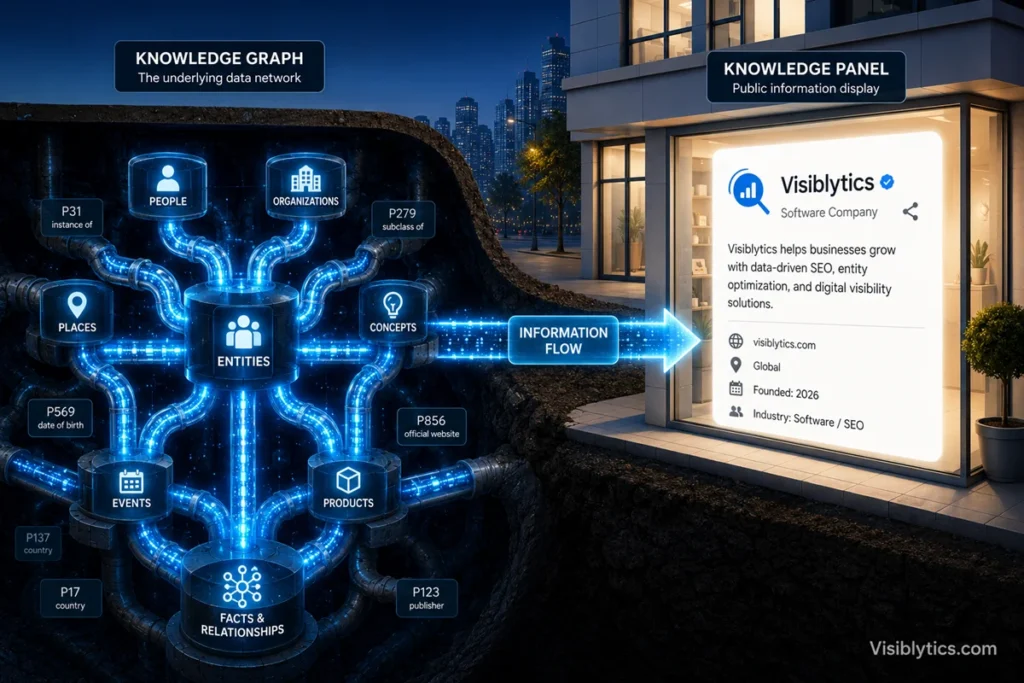
Knowledge Graph: A structured database of entities and their relationships that search engines and AI systems use to understand the world. Invisible to users. Affects everything.
Knowledge Panel: An information box that appears in search results when Google has enough confidence in an entity’s knowledge graph representation to display it publicly. Visible to users. Affects branded search results specifically.
Every question in this article comes back to those two sentences.
The Full Comparison
| Knowledge Graph | Knowledge Panel | |
|---|---|---|
| What it is | A structured database | A search results feature |
| Who can see it | No one directly | Anyone searching your entity name |
| What it stores | Entities, attributes, relationships | A summary of entity information |
| Where it lives | In search engine infrastructure | On the search results page |
| How it is built | From many sources over time | Generated from knowledge graph data |
| Can you request one? | No | No |
| Can you directly create one? | No | No |
| Can you edit it? | No (you can improve the inputs) | Partially (once it exists) |
| What affects it | Entity clarity, schema, corroboration | Knowledge graph confidence level |
| What it affects | All search and AI understanding of your entity | Branded search appearance specifically |
| Timeline | Builds gradually over months | Appears when confidence threshold is met |
The row that trips people up most often is “Can you directly create one?” The answer is no for both. You cannot create a knowledge panel by submitting a form or optimizing a page. You build the entity foundation and knowledge graph signals that make a panel possible, and then a panel may or may not appear.
Why People Confuse Them

The confusion is understandable because the two are causally linked: you cannot have a knowledge panel without knowledge graph presence. That causal link makes them feel like the same thing. They are not. Here are the three most common mental model errors.
Error 1: “I need to get a knowledge panel” as a goal.
Knowledge panels are not a thing you get. They are a thing that appears when you have done entity work well enough for Google to be confident displaying your entity publicly. A person who sets “get a knowledge panel” as their goal will spend time on the wrong activities: trying to claim panels that do not exist yet, submitting corrections to a panel for an entity that is not well-defined, or optimizing the panel display without fixing the underlying knowledge graph signals that are causing the problem.
The correct goal is: build a strong knowledge graph presence. A knowledge panel is a possible outcome of that goal, not the goal itself.
Error 2: “My knowledge panel shows wrong information” : but the real issue is the knowledge graph.
If your knowledge panel shows the wrong founding date, the wrong description, or the wrong professional affiliation, the tempting response is to try to edit the panel directly. Google does provide a “Suggest an edit” feature for panels, and it is worth using. But if the underlying knowledge graph signals are contradictory (your schema says one date, your Wikidata entry says another, a press mention says a third), the panel will revert to the version of reality that the knowledge graph has the most confidence in.
The fix is at the knowledge graph level first: resolve the conflicting signals through the process covered in the Entity Reconciliation guide. Then suggest the edit. Without fixing the underlying signals, the edit either will not stick or will take much longer to apply.
Error 3: “If I optimize my knowledge panel, my knowledge graph will improve.”
The relationship only runs in one direction. Knowledge graph signals influence knowledge panels. Knowledge panel edits do not improve knowledge graph signals. Spending effort on panel presentation while ignoring entity homepage structure, schema markup, Wikidata entries, and external corroboration is optimizing the output while ignoring the input.
What the Knowledge Graph Actually Does
The knowledge graph runs underneath everything. It is what allows a search engine to answer “who founded Visiblytics?” without scanning every page on the web. It is what allows an AI system to accurately describe your company when someone asks about it. It is what determines how your entity is represented across every search surface, not just the branded search result with the panel.
Strong knowledge graph signals affect:
All entity-relevant search results. When your entity appears in search results for queries about your topic area, the knowledge graph is partly determining whether those results accurately represent your brand, attribute content correctly to your entity, and connect you to the right topical context.
AI-generated answers. When ChatGPT, Gemini, Claude, or Perplexity constructs an answer that involves your entity, it draws on knowledge graph data. Strong, accurate, consistent knowledge graph signals produce accurate AI representations. Weak or conflicting signals produce inaccurate or absent ones.
Knowledge panel content. What appears in a knowledge panel, if one exists, is drawn from knowledge graph data. Every piece of incorrect information in a knowledge panel reflects a knowledge graph signal problem.
Entity disambiguation. When your brand name is common or similar to another entity, the knowledge graph is what allows search engines to distinguish between them. As covered in the Entity Disambiguation guide, weak knowledge graph signals make disambiguation harder and increase the risk of entity confusion.
The full mechanics of how the knowledge graph works are in the Knowledge Graph guide. This article focuses specifically on how it relates to and differs from the knowledge panel.
What the Knowledge Panel Actually Does
The knowledge panel is a display feature. It is Google’s way of presenting a structured summary of what it knows about a specific entity to a user who has searched for that entity. It appears on the right side of desktop search results or at the top of mobile results for branded searches.
What a knowledge panel does:
Increases visibility for branded searches. A knowledge panel occupies significant real estate on the search results page, particularly on mobile. For someone who searches your brand name, the panel is often the first thing they see.
Communicates trust signals to users. The presence of a panel signals that Google has identified and verified this entity. For a user who does not know your brand, that implicit verification is a trust signal before they visit your site.
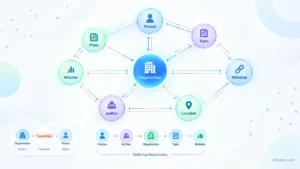
Displays entity attributes. The panel shows your description, your founding date, your founder, your location, your social profiles, and your related entities. These are the same attributes you define through entity SEO work, now displayed publicly.
Can be partially managed. Once a knowledge panel exists, Google allows the verified entity to suggest edits. This is not the same as direct control, but it is more influence than you have over your knowledge graph representation.
What a knowledge panel does not do:
It does not improve your knowledge graph. Panel edits are downstream of knowledge graph signals. They adjust how the panel displays; they do not feed back into the knowledge graph.
It does not guarantee accurate AI representation. A knowledge panel being present does not mean AI systems will cite you accurately. AI systems draw on knowledge graph data and training data independently of whether a panel exists.
It does not appear for all entities. Many well-defined, correctly structured entities do not have knowledge panels. Panel appearance is not a binary indicator of entity health. The Knowledge Panel guide covers eligibility in detail.
The Practical Workflow Difference
Understanding the distinction between knowledge graph and knowledge panel changes the daily priority order for entity work.
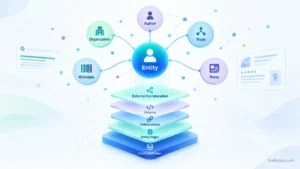
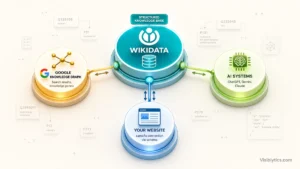
If you want to improve how your entity is represented across all of search and AI: Work on knowledge graph signals. That means entity homepage structure, schema markup, Wikidata entry, external corroboration, and entity consistency. This work affects everything: AI citations, all search surfaces, knowledge panel content (if one exists), and entity disambiguation. The Entity SEO guide and the Wikidata guide cover the foundational work.
If you have a knowledge panel with wrong information: Fix the knowledge graph signals first. Identify which source is producing the incorrect information, correct it at the source following the authority hierarchy (entity homepage and schema first, then Wikidata, then social profiles and directories), and then use the “Suggest an edit” feature in the panel. Without fixing the source, the edit is unlikely to stick. The Entity Reconciliation guide covers the fix process.
If you do not have a knowledge panel and want one: You cannot pursue a panel directly. You build entity clarity, schema markup, Wikidata presence, and external corroboration. When Google’s confidence in your entity reaches a sufficient threshold, a panel may appear. There is no verified timeline and no guaranteed outcome. The Knowledge Panel guide covers eligibility signals in detail.
If your panel disappeared: This indicates that knowledge graph confidence in your entity has dropped below the display threshold. The most common causes are: entity signals becoming inconsistent (a rebrand that was not updated across all sources), loss of corroborating external sources, or a technical issue with schema. Audit your entity signals using the process in the Knowledge Graph Audit guide and address any consistency gaps.
A Real-World Scenario
Here is a scenario that illustrates why the distinction matters practically.
A brand launches a new website after a rebrand. The old name was “X Agency.” The new name is “Visiblytics.” They update their website and their social profiles. Six months later, their knowledge panel still shows “X Agency” with the old description.
The wrong response: Try to edit the knowledge panel directly. Submit an edit. Wait. Submit again. Assume Google is slow.
What is actually happening: The knowledge graph has not fully reconciled the rebrand. External sources, including directories, old press mentions, and a Wikidata entry, still carry the old name. The knowledge graph has conflicting signals: the high-authority new-name signals from the website and schema, and the accumulated old-name signals from external sources. The panel is displaying whatever the knowledge graph has the most confidence in, which is still the old representation because the external signals have not been updated.
The right response: Update Wikidata first (high-authority independent source). Update social profiles. Reach out to the highest-authority press mentions for corrections. Use the entity briefing process from the Digital PR guide to generate new mentions with the correct entity information. Once the external signals align with the on-site signals, the knowledge graph reconciles, and the panel updates.
The panel was never the problem. The knowledge graph signals were the problem. The panel was just where the problem became visible.
❓ Frequently Asked Questions
What is the difference between a knowledge graph and a knowledge panel?
A knowledge graph is a structured database of entities and their relationships, invisible to users, that search engines and AI systems use to understand the world. A knowledge panel is a visible search feature that displays a summary of what the knowledge graph knows about a specific entity when someone searches for it. The knowledge graph is the cause. The knowledge panel is one possible effect.
Can I create a knowledge panel for my business?
Not directly. A knowledge panel appears when Google has accumulated enough confidence in your entity’s knowledge graph representation to display it publicly. You build that confidence through entity SEO work: a clear entity homepage, schema markup, a Wikidata entry, consistent external profiles, and corroboration from credible sources. A panel may appear as a result of that work, but there is no direct creation path.
Why is my knowledge panel showing wrong information?
Wrong information in a knowledge panel indicates a conflicting signal in the knowledge graph. Something that ranks highly in Google’s source authority hierarchy is stating the incorrect information. Identify the source of the conflicting signal (often Wikidata, a Wikipedia article, or a high-authority press mention), correct it there, and then suggest the edit in your panel. Without fixing the source signal, the edit is unlikely to stick permanently.
Does fixing my knowledge panel improve my knowledge graph?
No. The relationship runs in one direction: knowledge graph signals influence knowledge panel content. Knowledge panel edits do not feed back into the knowledge graph. Fixing the panel display is a downstream action. Fixing the knowledge graph signals is the upstream action that produces lasting changes.
Do I need a knowledge panel to appear in AI-generated answers?
No. AI systems draw on knowledge graph data and training data independently of whether a knowledge panel exists. A well-defined entity with strong knowledge graph signals can appear in AI-generated answers without having a knowledge panel. A knowledge panel is a visible indicator of knowledge graph confidence, not a prerequisite for AI visibility.
If I have a knowledge panel, does that mean my knowledge graph is strong?
Not necessarily. A knowledge panel indicates that Google has reached sufficient confidence to display your entity publicly for branded searches. It does not mean your knowledge graph signals are complete, fully accurate, or optimally structured for AI citation or topical authority. Many entities with knowledge panels still have inconsistent attributes, missing Wikidata entries, or weak external corroboration. The panel is a meaningful milestone, not a finish line.
One Is the Foundation. One Is a Window Into It.
The knowledge graph is what search engines and AI systems actually use to understand your entity. The knowledge panel is a window into what the knowledge graph currently knows about you for branded searches.
Every entity work decision becomes clearer with this distinction in place. If you want to change how your entity is understood across all search and AI surfaces, work on the knowledge graph. If you want to monitor how that work is being reflected publicly, watch the knowledge panel. If the panel shows wrong information, fix the knowledge graph signals that are producing it.
For the full mechanics of knowledge graph structure and how to build presence in it, the Knowledge Graph guide covers the complete picture. For knowledge panel eligibility, optimization, and management, the Knowledge Panel guide covers the full framework.