
Yes, a small business can get a knowledge panel, but it is not guaranteed, nobody can tell you when, and a panel is the wrong way to judge whether your entity work is succeeding. Size does not disqualify you. What size does is remove the shortcuts that larger entities have, mainly years of accumulated press coverage and third-party references, which means the work has to be sequenced more carefully.
This guide is for the owner of a small business, a solo consultant, or a small agency who has read the framework and wants to know where to spend limited time. It does not repeat the full eligibility framework. The Knowledge Panel guide covers how panels work, and the Knowledge Panel Eligibility Signals guide covers each signal in depth. This article is about what changes when you are small.
What I Can and Cannot Tell You
Knowledge panels exist for entities far smaller than celebrities and large brands, and Google has not published a size or revenue cutoff. Beyond that, a few limits are worth stating plainly before anything else.
I do not have a verified source for how many small businesses currently have knowledge panels, and I would treat any percentage you see quoted with suspicion. Google has not published the confidence threshold that triggers a panel, so I cannot tell you how many signals are enough. I also cannot give you a verified timeline, and anyone who gives you a precise one is guessing.
What I can offer is a reading of how the signals work, based on how knowledge graphs are built. The signals that feed a panel are the same for every entity, and most of them are within a small business’s reach. The one that is not quick to build is independent corroboration, and that is where most of the planning below is aimed.
What Being Small Changes and What It Does Not
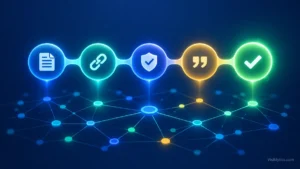
The five eligibility signals are identical for a small business and a large one. What changes is how much each one costs you, and one of them costs a small entity far more than the others.
| Signal | For a small entity | Why |
|---|---|---|
| Clear entity identity | Usually cheaper | One name, few legacy variants, one decision-maker. Harder only if your name is generic or shared with another entity. |
| Consistent information | Cheap to achieve, easy to let slip | Few surfaces to align, but nobody owns the upkeep, so profiles go stale after a change of role, address, or focus. |
| Structured data | Same cost at any size | Schema takes the same effort whether you have three employees or three thousand. It is the cheapest signal and fully in your control. |
| Authoritative mentions | Usually the hardest | No PR team and no archive of coverage. Larger entities accumulate mentions as a side effect of existing. Small ones have to go and get them. |
| Strong relationships | Mixed | Fewer relationships to map, but also fewer recognized entities to connect to. |
The bottleneck for most small entities is the fourth row. That is why sequencing matters: do the cheap, controllable work first so that when a credible mention does arrive, it lands on a clearly defined entity and counts for something.
Being small also has a real advantage. A new or small business can get its entity definition right from the start. A twenty-year-old company with five former names, three old addresses, and a dozen stale directory listings has a far messier reconciliation problem than a small business that picks one name and uses it everywhere.
Two Different Things Both Called a Knowledge Panel
If you run a business with a physical location that serves local customers, the panel you are most likely to see is the local business panel tied to your Google Business Profile, which is a different mechanism from the entity-based panels this series focuses on. To the best of my knowledge, local panels are built largely from Business Profile and Maps data rather than from the entity signals covered in the rest of this series. Google’s documentation on this has changed over time, so verify the current behavior in Google’s Business Profile help pages before relying on my description.
Which path applies to you depends on what kind of business you run.
| Your situation | The panel you are most likely to see | Where to start |
|---|---|---|
| Local business with a physical location serving local customers | Local business panel tied to a Google Business Profile | Claim and verify your Business Profile, and keep name, address, and phone identical everywhere |
| Online business, software product, or agency | Entity-based panel | Entity homepage, schema, an independent source or two, then Wikidata |
| Solo consultant, author, or specialist | Person entity panel | Author page and Person schema, covered in Personal vs Brand Knowledge Panels |
| Local business that also has an online brand | Possibly both | Make sure the details in each match exactly so they do not conflict |
Claiming a Business Profile and claiming an entity-based knowledge panel are different processes with different requirements. The Knowledge Panel Claiming guide covers the entity-based side.
Where to Spend Limited Effort
Spend effort in order of cost against signal: start with what is cheap and fully in your control, move to what takes more work, and do not skip ahead to the slow reputational work before the foundation exists. The full phased project is in the How to Build Knowledge Graph Presence guide, and the How to Get a Knowledge Panel guide covers the route to a panel. What follows is the triage version for someone who cannot do everything at once.
First: what is free and fully in your control
Decide the canonical version of your name, description, founding year, and key people, and write it down. Build an entity homepage that states those facts plainly (the Entity Homepage guide covers what it needs). Add Organization or Person schema that matches it exactly (the Schema and Knowledge Graphs guide covers which properties matter). Then make every profile you control say the same thing, following the Entity Consistency guide.
This costs time rather than money, depends on no one else’s decisions, and everything after it builds on it. Depending on how many profiles you have, expect anywhere from a few hours to a few days.
Second: a Wikidata entry, but in the right order
Wikidata has a lower bar than Wikipedia, but it is not unconditional. As I understand Wikidata’s notability policy, an item needs to be supported by serious, publicly available references or fill a structural need. An entry for a small business that rests only on its own website can be challenged or deleted. Check the current policy before you create anything.
The practical consequence is about order. Create the entry once you have at least one independent source you can cite, such as a credible article, a trade body listing, or a business registry record. If you have none yet, spend that time on mentions first. The Wikidata for SEO guide covers the creation process.
Third: independent mentions, the slow part
This is the work that never finishes, and it is where small entities fall behind, so it deserves a plan rather than hope. The sources realistically available to a small business include:
- Local or trade press covering something genuinely newsworthy about your work
- Professional association or chamber member pages that name you with accurate details
- Partner and supplier pages that mention your business and what you do for them
- Podcast guest appearances where the show notes name you and your role
- Guest contributions to publications in your field, under a consistent byline
- Case studies on a client’s own site, published with their permission, that name your business correctly
Whatever the source, brief the writer or host with your canonical name, description, founding year, and the correct attribution for key people. The Digital PR guide covers how to do that. One accurate mention in a credible, relevant source does more than many weak ones, and none of these is a guaranteed route to a panel.
Three Detours Worth Skipping
Small businesses tend to lose time in the same three places, and each one feels productive while it is happening.
Chasing a Wikipedia article. Wikipedia’s notability standards generally require significant coverage in reliable, independent sources. A small business that has not yet earned that coverage is far more likely to see its article deleted than to gain a panel from it. Earn the coverage first. If a Wikipedia article becomes justified, it will follow.
Paying someone to create a panel. Panels are generated by Google when its confidence in an entity is sufficient, and no service can create one directly. Be skeptical of anyone who promises a panel for a fee. If a service offers to build entity signals properly (the entity homepage, schema, and consistency work above), that is a different and legitimate offer, but ask what exactly they will do.
Submitting to dozens of directories. More listings means more places where your name, address, and description can drift out of agreement, and low-authority directories add little corroboration. A handful of credible, accurate, maintained listings is better than a long tail of neglected ones.
If the Panel Never Appears
You will still have done work that pays off elsewhere, because the signals that feed a panel also shape how search engines and AI systems describe you. A panel is a lagging indicator. It may arrive late or not at all, and its absence at month six is weak evidence either way about whether the work is sound.
There are ways to track progress without one:
- Ask an AI system a direct question about your business and check whether the description is accurate, then repeat it every month or two
- Check whether content from your site appears with correct author attribution in search results
- Confirm your schema still validates after every site change
- Confirm your Wikidata entry, once created, stays accurate and unchallenged
- Keep a running list of independent mentions and note whether each one names you correctly
When something looks wrong, the Knowledge Graph Audit guide gives a diagnostic for working out which layer is the problem. For why the entity work matters beyond panels, the AI Visibility guide covers how the same signals affect whether AI systems cite you.
The honest summary is simple. A small business can build everything a panel depends on, apart from time and independent recognition, and those two take longer for a small entity than for a large one. Build the foundation properly, pursue the mentions steadily, and treat a panel as a possible result of that work rather than the measure of it.